
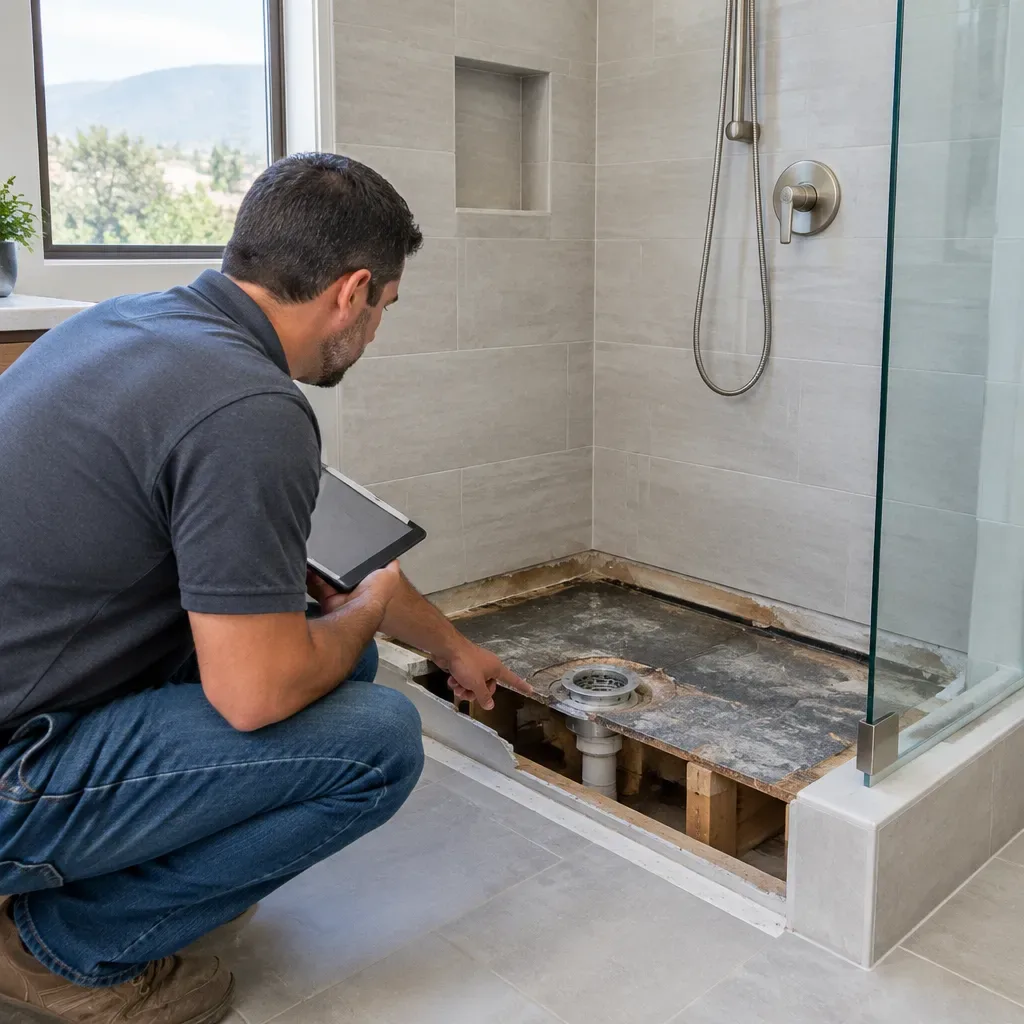
When Should a Bathroom Remodel Near Shoup Ave in West Hills Replace the Shower Pan?
Replace the shower pan during a bathroom remodel when leakage, failed waterproofing, poor drainage caused by an improper slope, drain movement, cracking, distortion, or moisture damage is confirmed or strongly suspected. If the shower is already being opened for tile, layout, or plumbing work, replacement is often the more sensible choice when the condition of the concealed pan and waterproofing cannot be verified.
A cracked grout joint or failed bead of caulk does not automatically mean the pan has failed. Those are visible symptoms that may allow surface water through, while the actual cause could be a finish issue, a drain connection, wall waterproofing, supply plumbing, or another concealed condition. An inspection helps separate a limited repair from a shower rebuild.
Quick Answer
Replace the pan if an inspection finds a leak, damaged substrate or framing, a compromised drain connection, a cracked or warped pan, persistent water escaping at the curb, or waterproofing that cannot reliably protect the shower assembly. Investigate first when the only issue is isolated worn caulk or grout and there is no evidence of moisture beyond the finish.
For a planned bathroom remodel near Shoup Ave in West Hills, it is usually unwise to install new tile over an unverified shower base. The pan, curb, drain, and wall waterproofing work as one water-management system. If several of those parts are compromised, rebuilding the full shower assembly is generally more reliable than replacing only one layer.
What symptoms suggest a shower pan may need replacement?
The most meaningful signs are changes that point beyond ordinary surface wear. Look for standing water that remains after showering, a soft or unstable shower floor, movement around the drain, persistent dampness near the curb, recurring musty odors, or staining on an adjacent wall or ceiling below.
Each symptom has more than one possible explanation. Standing water, for example, can result from hair or debris in the drain, poor floor slope, or a drainage issue. Staining below the shower may relate to the drain, waterproofing, a supply line, or another plumbing component. A professional finding requires inspection and, when appropriate, controlled testing.
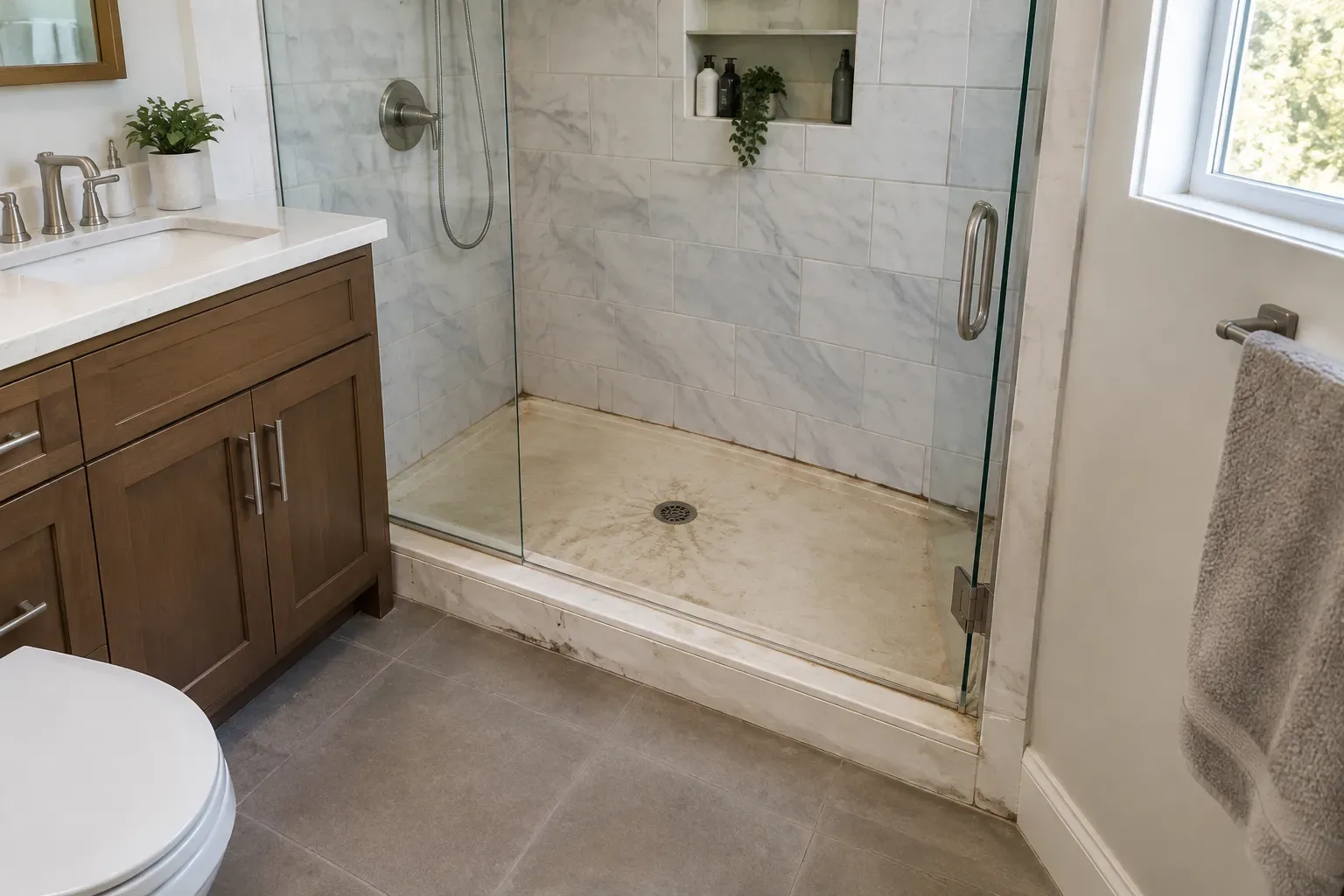
Is cracked grout or caulk proof that the shower pan has failed?
No. Grout and caulk are finish materials, not the primary waterproofing layer of a properly built tiled shower. Cracked grout, missing grout, or separated caulk can let water reach areas it should not, but these conditions do not prove that the pan or membrane underneath has failed.
A localized caulk failure may be repairable after the joint is cleaned, dried, and evaluated. Regrouting may improve a minor finish defect. Neither repair restores a damaged pan, failed waterproofing membrane, loose drain connection, or deteriorated substrate. The common mistake is treating every visible crack as cosmetic without checking for moisture migration behind it.
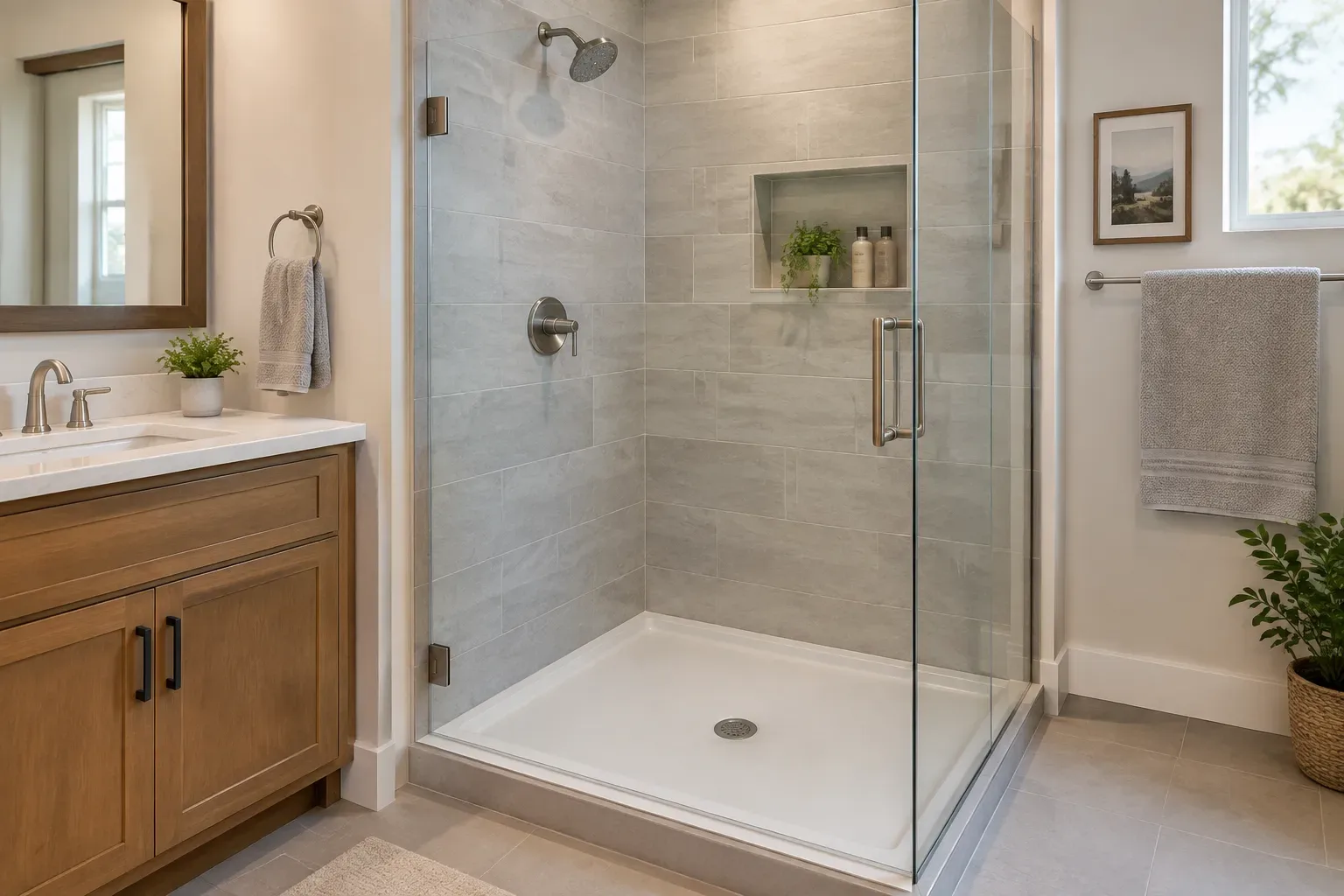
What can be repaired, and what usually calls for replacement?
The right choice depends on the affected layer and whether the system can still be trusted after the repair. These are distinct scopes, not interchangeable solutions.
Surface repair
Fresh caulk or grout can address an isolated finish defect when the surrounding shower is sound and there is no evidence of a concealed leak. It is not a substitute for waterproofing.
Pan replacement
Replacing the base may fit a shower with a confirmed pan defect when adjacent waterproofing, curb details, wall areas, and the drain connection can be properly integrated and verified.
Full shower reconstruction
A full rebuild is often the practical option when the pan, wall waterproofing, curb, bench, niche, or drain connection are compromised together. It allows the concealed assembly to be rebuilt as one coordinated system.
A pan-only scope does not automatically solve water intrusion. In a tiled shower, the floor waterproofing must connect correctly with the drain and continue into critical wall and curb areas. If those adjoining details cannot be preserved or verified, a partial repair can leave the original failure path in place.
Why replace the pan during a planned bathroom remodel?
Demolition changes the decision. Once existing tile and finishes are being removed, the pan, drain area, curb, and substrate may become accessible for evaluation. This is the point to correct hidden problems before new finishes conceal them again.
Replacement is worth considering during a remodel if the existing pan is old or inaccessible, visibly damaged, improperly sloped, incompatible with the intended tile layout, or part of an assembly with unknown waterproofing. It is not automatically required solely because the bathroom is being updated. If inspection supports retaining a sound shower base and the renovation scope does not disturb it, preserving it may be reasonable.
For planning context, a shower rebuild can affect more than tile selection. It may involve drain work, framing repairs, wall substrate, waterproofing, and finish restoration. Review the broader scope implications alongside a bathroom remodel cost breakdown for Woodland Hills homeowners.
How is a suspected shower-pan leak evaluated?
A thorough evaluation starts with what can be observed, then identifies what remains concealed. No non-destructive inspection can guarantee that hidden damage is absent. If symptoms or test results point to a concealed failure, selective or broader demolition may be necessary to confirm the condition.
- Record the symptom, including when it appears, where moisture is visible, and whether it follows every shower use or only certain conditions.
- Check accessible areas around the shower, including adjacent walls, flooring, the ceiling below when applicable, and the drain and curb.
- Have the shower’s finish joints, drain area, floor slope, and signs of movement assessed to identify likely paths for water.
- Discuss an appropriate controlled water or flood test when feasible for the existing shower system.
- Review the proposed scope after findings are known, including whether the work should be a surface repair, pan replacement, or full reconstruction.
A flood test generally involves holding water in the shower base under controlled conditions to observe whether the waterproofed floor retains it. It can be useful, but it has limits: access, drain configuration, existing finishes, and concealed pathways can affect what the test can confirm. It also does not rule out every plumbing-related leak.
When is a full shower rebuild better than replacing only the pan?
A complete rebuild is usually the safer path when multiple water-management details have failed or cannot be joined reliably to a new base. Examples include a deteriorated curb, questionable waterproofing behind wall tile, a leaking bench or niche, substantial substrate damage, or a drain connection that needs reworking.
The goal is not to recommend the largest project. It is to avoid installing a new pan beneath wall, curb, or drain details that continue to let water reach the structure. Conversely, a full rebuild may be unnecessary if inspection identifies a truly isolated, accessible issue that can be repaired without compromising the rest of the assembly.
What should be checked before selecting a new shower pan?
Start with the shower footprint, drain location, and intended finish. A new pan must work with the planned layout and drain assembly, while the surrounding waterproofing must be compatible with the selected system. The subfloor or slab area also needs evaluation if there are signs of softness, deterioration, or movement.
Ask the remodeling team to explain the proposed transition from the pan to the walls and curb, how the drain will be integrated, what damaged materials will be removed if discovered, and what happens if demolition reveals broader moisture damage. If the project changes the shower footprint or drain location, the permitting and inspection path may also change. For general planning, see which bathroom renovations may require an LADBS permit; the exact requirement should be confirmed for the actual scope.
How can West Hills homeowners avoid covering up a hidden shower problem?
Do not choose tile or fixtures before deciding whether the shower structure is sound. New surface finishes can make a bathroom look complete while leaving an active leak, poor slope, or compromised waterproofing below them.
For homes near Shoup Ave and throughout the Woodland Hills service area, a bathroom remodeling consultation can help define the work before materials are ordered. Bathroom remodeling planning is most effective when the shower base, drainage, waterproofing, and finish design are considered together. If moisture damage appears to extend beyond the bathroom, the project may also need broader full-home renovation planning.
The practical takeaway is simple: repair a verified surface defect, replace a confirmed failed pan, and rebuild the shower when connected waterproofing details cannot be trusted as a system.
FAQ
How do I know if my shower pan is bad?
Look for recurring moisture outside the shower, a soft or flexing floor, cracks or distortion in a prefabricated base, persistent standing water, drain movement, or staining near adjacent surfaces. None of these signs proves the pan is the source by itself. Inspection may identify a pan issue, failed waterproofing, drain leak, plumbing problem, or another cause. The key is determining where water is escaping before choosing a repair.
Can a leaking shower pan be repaired without removing tile?
Sometimes, but only if the leak is confirmed as a limited and accessible issue. Recaulking or regrouting can address finish defects, but it cannot repair a failed membrane or damaged pan behind tile. A leak at the drain connection or below the floor may also require access that surface repairs cannot provide. If testing suggests concealed failure, tile removal may be necessary to diagnose and correct it properly.
Should I replace the shower pan when replacing shower tile?
It is often worth evaluating, especially if the tile removal exposes the shower base, curb, or drain area. Keeping an existing pan can make sense when it is sound, compatible with the new design, and its waterproofing connection can remain reliable. Replacing tile while leaving an unverified or poorly sloped base can create a costly repeat project if water problems appear after the new finishes are installed.
Why is water pooling on my shower floor after it drains?
Pooling can result from a blocked or slow drain, improper floor slope, settlement or movement, or irregularities in the finished surface. A pan replacement may be appropriate if the waterproofed base was formed incorrectly or is damaged, but drainage should be checked first. Clearing a drain is different from correcting a floor that directs water away from the drain poorly. An assessment can distinguish the two conditions.
Can shower caulk failure cause water damage?
Yes, failed caulk can allow water into joints around the curb, walls, glass enclosure, or fixtures. Its presence does not reveal how far water has traveled or whether the underlying waterproofing remains intact. Prompt repair is sensible for a small, dry, isolated failure. If there is staining, dampness, odor, loose tile, or repeated caulk separation, the area should be evaluated for a larger installation or moisture issue.
Does replacing a shower pan mean rebuilding the whole bathroom?
No. The work may be limited to the shower, but the final scope depends on access, finishes, drain conditions, waterproofing connections, and any damaged materials found during demolition. Some projects require only shower reconstruction and finish restoration around it. Others expand when moisture has affected nearby framing, flooring, or walls. A defined inspection and demolition plan helps avoid assuming either the smallest or largest scope too early.
How long should a shower pan last?
There is no reliable universal replacement age. Durability depends on the pan material, installation quality, waterproofing system, drain detailing, use patterns, maintenance, and any prior movement or water damage. A shower should be evaluated based on its current condition rather than replaced only because it has reached a particular age. Visible symptoms, testing results, and findings after access is opened are more useful decision points.
Do I need a permit to replace a shower pan in West Hills?
Permit needs depend on the actual work, such as whether plumbing is altered, the drain is relocated, walls or framing are changed, or other regulated portions of the bathroom are affected. A like-for-like repair may be treated differently from a remodel that changes plumbing or layout. Confirm the requirement with the applicable authority and project professional before work begins, rather than relying on a general rule for every shower project.
Ready to discuss your project?
Discuss a suspected shower-pan issue or remodel scope near Shoup Ave in West Hills with Renoa Design & Construction.